

One day your furnace hums along fine, and the next it’s blowing cold air during the first freeze of the year. Unexpected home repairs rarely announce themselves in advance, and they almost never happen at a convenient time or price point. The good news is that you can plan for the unplannable by understanding which systems tend to fail, roughly what repairs cost, and how to build a cushion before you need one. This guide breaks down the home systems most likely to surprise you and shows you how to budget so a sudden breakdown never turns into a financial emergency.
Build a Dedicated Emergency Repair Fund
Most financial advisors suggest a general emergency fund covering three to six months of expenses, but that money is meant for job loss or medical bills, not a cracked water heater. Dipping into it for a new furnace means you’re left exposed if you lose your income the following month. Homeowners benefit from a separate, smaller fund specifically earmarked for repairs, ideally one percent of your home’s value set aside every year. A home worth 300,000 dollars would mean saving roughly 3,000 dollars annually, which can be split into monthly contributions of around 250 dollars. Older homes, or those with aging roofs, original windows, or outdated electrical systems, may warrant pushing that figure closer to two percent, since components nearing the end of their lifespan are more likely to fail at the same time. Newer homes under warranty can sometimes get by with a slightly lower rate until major systems start aging out of coverage. Keep this fund in a separate, easily accessible account, such as a high-yield savings account, rather than mixing it with your general emergency savings or checking account. Separation matters psychologically as much as practically; it keeps you from “borrowing” repair money for vacations or holiday shopping and then scrambling when the water heater finally gives out. Some homeowners automate a transfer right after each paycheck so the contribution never feels optional. If a major repair draws the fund down, treat rebuilding it as a priority the same way you would replenishing your regular emergency savings after a withdrawal. Consider temporarily increasing your monthly contribution for a few months after a big expense to get back to your target balance faster.
Keeping this fund in a separate savings account, rather than mixed in with everyday spending money, makes it easier to resist dipping into it for non-emergencies. A high-yield savings account at an online bank is a good option, since it keeps the money a step removed from a debit card while still earning some interest. Many homeowners aim for a target balance of $1,000 to $2,000 to start, then build toward covering one major system replacement, such as a $5,000 water heater or furnace. Automating a monthly transfer removes the temptation to skip a contribution during a tight month. Even $50 to $100 a month adds up over a year, and the transfer can be scheduled right after payday so it never feels like a conscious decision. Some homeowners round up the contribution during higher-income months, like when a bonus or tax refund comes through, to reach their target balance faster. Over time, this fund becomes the buffer that keeps a single bad week from turning into a stack of credit card debt. Instead of financing a burst pipe or failed air conditioner at 20% interest, the repair gets paid in cash and the fund simply gets rebuilt afterward. Treating replenishment as a recurring task, the same as the original contribution, keeps the fund ready for whatever breaks next.
Track the Age and Condition of Your Heating and Cooling Systems

HVAC systems are some of the most expensive components in a home, and they rarely fail at a convenient time. A furnace typically lasts 15 to 20 years, while central air conditioners last closer to 10 to 15, so knowing the installation date of each unit helps you anticipate when trouble is more likely. Check the manufacturer label on the unit or your home inspection report if you’re unsure how old your system is, and jot the installation date somewhere you’ll actually remember, like a home maintenance folder or a note on your phone. Watch for warning signs that a system is nearing the end of its life, such as rising energy bills, uneven heating or cooling, strange noises, or repairs becoming more frequent. A unit that needs servicing more than once a year is often signaling that replacement is on the horizon rather than another round of patchwork fixes. Scheduling annual maintenance can catch small issues before they become expensive furnace repairs, and it often extends the life of the unit by several years. Budget roughly $75 to $200 per visit for a professional tune-up, and plan for separate visits in spring and fall to cover both the air conditioner and the furnace. Beyond routine maintenance, set aside a dedicated HVAC replacement fund rather than treating a breakdown as a surprise expense. A new furnace can run $3,000 to $7,000 installed, while a central air system often falls in a similar range, so saving even $25 to $50 a month can soften the blow when the time finally comes.
Air conditioning repair costs can range widely depending on the problem, from a simple $150 capacitor replacement to a full compressor swap that can run $2,500 or more. Homeowners who ignore strange noises, weak airflow, or rising energy bills often end up paying more later because minor issues compound over time, turning a cheap fix into a system-wide failure. Age matters as much as symptoms. Most central air conditioners and furnaces last 15 to 20 years, so if your system is approaching that range, budget for either a major repair or eventual replacement rather than assuming routine maintenance will keep it running indefinitely. A unit nearing the end of its lifespan is also more likely to need multiple smaller repairs in the same year, which adds up quickly. Keep a simple log of your HVAC system’s install date, past repairs, and annual tune-ups. This record helps you spot patterns, like a furnace that needs a new igniter every couple of years, and gives you leverage when deciding whether another repair is worth it or if replacement makes more financial sense. Setting aside a portion of your repair fund specifically for HVAC work is smart, since these systems account for a large share of unexpected repair calls. A good starting point is $300 to $500 per year set aside, adjusted upward if your equipment is older or has a history of frequent breakdowns.
- Replace air filters every one to three months (more often if you have pets or allergies) to reduce strain on the system
- Note your system’s installation date; most furnaces last 15-20 years and AC units 10-15 years, so budget for replacement as you approach that range
- Schedule a professional tune-up each spring and fall to catch worn parts before they fail
- Keep outdoor condenser units clear of debris, leaves, and overgrowth, leaving at least two feet of clearance on all sides
- Note unusual sounds, smells, or cycling patterns and address them early
- Watch for rising energy bills, which often signal a system working harder than it should
- Set aside savings proportional to your system’s age, increasing the fund as it nears the end of its expected lifespan
Plan for Alternative Heating and Cooling Options
Not every home relies on a traditional central furnace and air conditioner, and homeowners adding or replacing a system should factor in the cost of newer technology. Ductless systems have grown popular for additions, converted garages, and older homes without existing ductwork. A mini split installation can be more efficient than extending traditional ducting, and it allows for zoned temperature control in individual rooms.
Because these systems involve both an indoor and outdoor unit connected by refrigerant lines, installation costs vary based on the number of zones and the complexity of the wall or ceiling work. Budgeting for this type of project means getting quotes from a few installers and asking about warranty coverage, since parts and labor warranties differ widely between brands. Even efficient systems eventually need servicing, so it helps to treat this as a long-term line item rather than a one-time expense.
Prepare for Electrical System Surprises
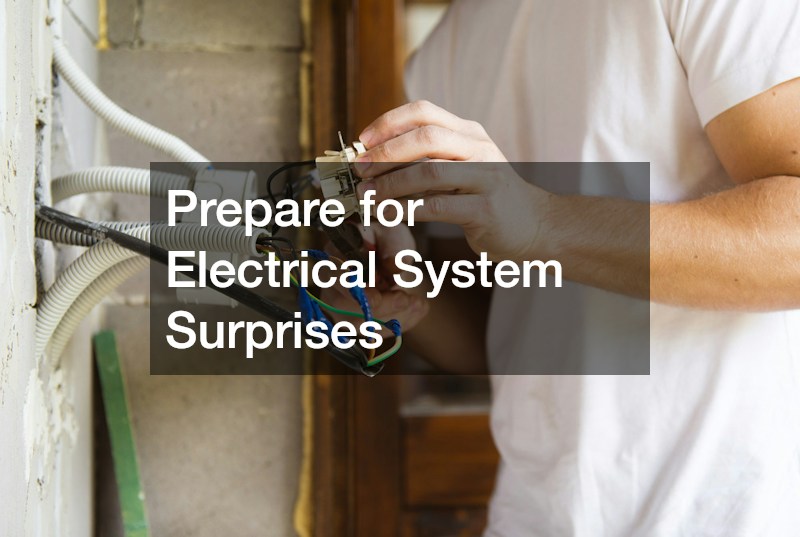
Electrical problems are some of the scariest unplanned repairs because they often involve safety risks alongside the inconvenience. Flickering lights, warm outlets, or a breaker that trips repeatedly are signs that something beyond a simple fix may be happening behind the walls. Older homes, in particular, may still have outdated wiring or insufficient panel capacity for modern appliances and electronics.
Hiring a licensed electrical contractor for an inspection every five to ten years, or sooner if you notice warning signs, can catch problems before they cause a fire or a costly outage. Panel upgrades, rewiring sections of a home, or adding circuits for new appliances can run from a few hundred to several thousand dollars depending on scope. Because these repairs are difficult to predict, keeping a flexible portion of your repair fund unallocated gives you room to respond quickly when something electrical goes wrong.
Prevent and Budget for Storm and Water Damage
Weather-related damage is one of the least predictable expenses a homeowner faces, since a single severe storm can cause thousands of dollars in losses within minutes. Homes in flood-prone areas or regions with frequent heavy rain benefit from proactive measures rather than reactive repairs. Installing storm flood barriers around doors, garages, and low points in the yard can reduce water intrusion significantly during a major storm event.
Beyond physical barriers, homeowners should check that gutters, downspouts, and grading direct water away from the foundation year-round. Reviewing your homeowners insurance policy annually helps you understand what water damage is actually covered, since many standard policies exclude flooding entirely. Setting aside funds for both prevention and potential cleanup gives you options instead of scrambling after the fact.
- Clean gutters at least twice a year to prevent overflow near the foundation
- Grade soil away from the house to reduce basement seepage
- Check sump pump function before the rainy season begins
- Keep sandbags or barrier materials on hand in flood-prone areas
Service Septic and Water Systems Before They Fail
Septic systems are easy to forget about because they work quietly underground until something goes wrong, and by then the repair is often urgent and unpleasant. Regular pumping every three to five years helps prevent backups, but homeowners with aerobic treatment units have additional maintenance needs. Scheduling routine ATU service keeps the aeration components functioning properly and helps avoid the much larger expense of a full system replacement.
Warning signs of septic trouble include slow drains throughout the house, gurgling pipes, or unusually lush patches of grass over the drain field. Ignoring these symptoms rarely makes them go away, and a failed system can cost many times more to replace than it would have cost to maintain. Building a modest annual allowance for septic maintenance protects both your property and your budget from a much larger bill later.
Keep Your Garage Door and Driveway Systems Functional
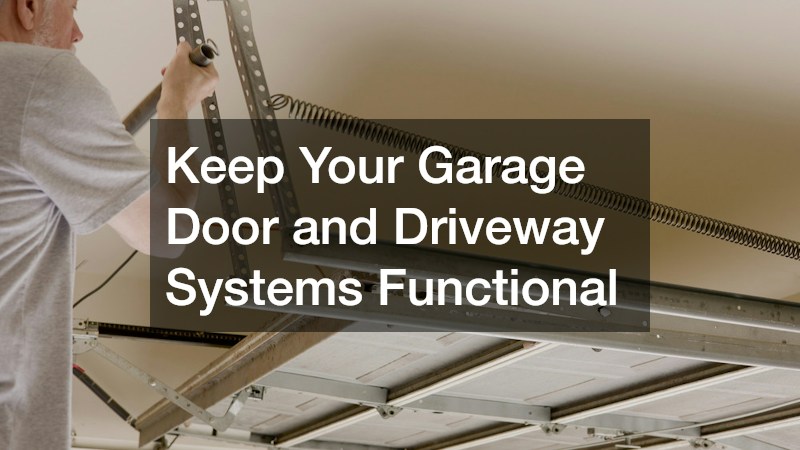
The garage door is one of the most frequently used mechanical systems in a home, cycling open and closed dozens of times a week, yet it rarely gets attention until it stops working. Springs, cables, and openers wear out over years of use, and a sudden failure can leave a vehicle trapped or a home less secure. Scheduling periodic garage door repairs for worn rollers, misaligned tracks, or weakening springs is far cheaper than waiting for a complete breakdown.
Because garage doors are heavy and spring-loaded, attempting a repair without proper tools or knowledge can be dangerous, which is why many homeowners choose to call a professional rather than troubleshoot alone. Budgeting a small annual amount for this system acknowledges how often it is used and how disruptive a failure can be to daily routines. Simple habits, like lubricating moving parts and testing the auto-reverse safety feature, can extend the life of the entire unit.
Maintain Outdoor Living Structures and Shade Features

Decks, porches, and patio covers take a beating from sun, rain, and temperature swings, and the materials used can significantly affect how often repairs are needed. Composite materials have become popular because they resist rot and warping better than traditional wood, and many homeowners hire a Trex Deck builder when replacing an aging structure to reduce future maintenance costs. Even composite decking needs periodic cleaning and inspection of the underlying support structure, since framing and fasteners are still typically wood or metal.
Shade structures like awnings and patio covers also need occasional attention, particularly after high winds or heavy snow loads. A canopy company can inspect fabric tension, frame stability, and drainage to prevent a minor issue from becoming a collapsed structure. Setting aside funds for outdoor living spaces ensures these features remain safe and usable rather than becoming a forgotten liability in the yard.
Create a Priority List for Competing Repairs
When multiple issues arise at once, which happens more often than homeowners expect, having a system for prioritizing repairs prevents panic decision-making. Safety issues, like electrical hazards or structural damage, should always come first, followed by repairs that risk further damage if delayed, such as a roof leak or a failing sump pump. Cosmetic or comfort-related repairs can typically wait until the budget allows.
Keeping a simple spreadsheet or notebook with estimated costs, urgency levels, and target timelines helps you make decisions calmly rather than reactively. Revisiting this list every few months also helps you catch small problems before they escalate into emergencies. A clear priority system turns an overwhelming list of maintenance needs into a manageable, step-by-step plan.
- Rank repairs by safety risk first, then by potential for further damage
- Assign a rough cost estimate to each item on the list
- Set realistic timelines based on your repair fund balance
- Reassess the list quarterly as new issues arise
Unexpected home repairs will always happen, but a surprise bill does not have to mean a financial setback. By understanding which systems are most likely to fail, maintaining them proactively, and building a dedicated repair fund, you put yourself in control instead of reacting under pressure. Start by reviewing the age and condition of your major systems this week, then set up a simple monthly savings habit to match. The homeowners who handle surprises best are the ones who planned for them long before anything broke.
